

A big reason as to why many people fail when it comes to achieving their fitness goals is their mindset.
A lot of people have an all-or-nothing mindset, which is basically black-and-white thinking.
For example, let’s say you’ve got a guy who, for the majority of his life, hasn’t paid much attention to what he’s eating, and from an exercise perspective, doesn’t really do much.
And for whatever reason, he now decides he wants to change his situation. So what he does is go on crash diets and starts exercising excessively.
Initially he sees results, but eventually he burns out because he’s doing too much, and with time goes back to the way he was previously living.
The cycle continues:
Come January the following year, he starts setting New Year’s resolutions and does the same thing he did previously — crash diets, excessive exercise, initial results, then burnout.
Here’s the key:
The real key to weight loss and fat loss — is small, gradual changes over time.
It’s a marathon, not a sprint.
And when it comes to achieving most fitness goals, it’s consistency that wins, not perfection.
So let’s talk about the things that actually work.

#1 Small Gradual Changes Over-Time Rather Than Extreme Overhauls
The analogy that I like to use, which perfectly describes this, is a child learning to walk.
You know yourself that when a child is born, they can’t walk — they have to go through stages.
They have to learn how to crawl before they can walk, and very often when they are learning to walk, they fall many, many times before they actually grasp it.
The point I’m getting at here is that the changes are gradual — it takes time, and this is often the approach that works best when it comes to making changes in your life that stick.
So, let’s say, for example purposes, you’ve got a guy who’s overweight, and for all of his life he’s practically consumed junk food.
For him to completely change his eating habits in a short period of time would be extremely difficult.
But what he can do is make small, gradual changes over time.
What he can do, for example, is eliminate soda and soft drinks and consume water instead.
So nothing else changes — he continues eating the same foods, but rather than consuming soda and soft drinks, he’s now consuming water.
And if he’s able to do this for one week, he then moves on to stage two, which is consuming a high-protein breakfast.
So do you see where this is going?
It’s small, gradual changes over time, and the reason why this tends to work is because it generates small wins — and small wins build confidence.
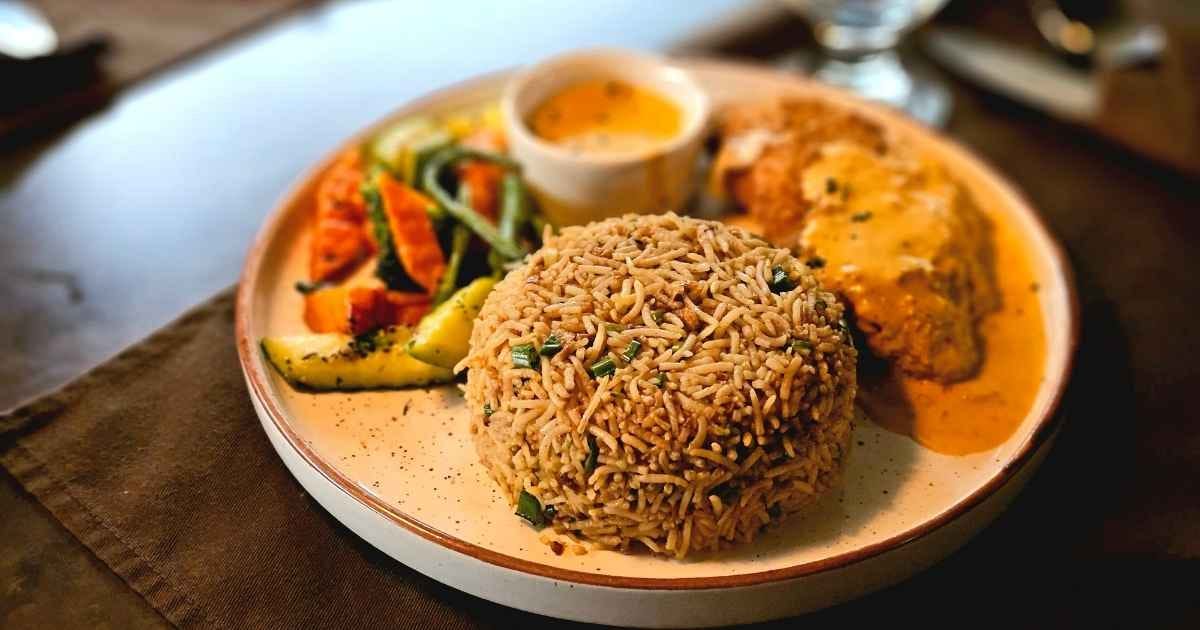
#2 Prioritising Whole Foods and Protein While Avoiding Fad Diets
If you go on social media, there are plenty of people selling us fad diets — we’ve got no-carb diets, we’ve got no-fat diets, we’ve got low-fat diets, low-carb diets, the list could go on.
I think at this moment in time, the only food group that has yet to be demonized is protein.
But here’s the thing:
Protein, fats, and carbs are all macronutrients, and what that basically means is that in order for your body to function at its best, it needs all three of those food groups.
This is why I’m not a fan of fad diets — you need all three.
The analogy that I like to use is that your body is kind of like a car, and for the car to move — for your body to move — it needs the right fuel.
And this is where whole foods come in, because unlike junk foods, whole foods actually nourish the body.
Whole foods feed the body, whereas junk foods are highly palatable, high calorie while also being low in nutritional value.
And this isn’t me saying never consume junk food because there needs to be balance.
But what you’ll tend to find with people who are able to keep the weight off for good is that their diets tend to be predominantly whole food diets, and they tend to consume enough protein, throughout the day.
Protein especially (animal protein) keeps you feeling fuller for longer.

#3 Training in a Way That Is Sustainable
I will always promote strength training because, from a body composition perspective, it’s what gives people the best results.
Number one, you build muscle. Number two, it increases your resting metabolic rate, which basically means you’re burning more calories throughout the day, even when you’re not exercising.
This is what most people want.
But it’s also important to note that the best form of exercise is actually the one you enjoy doing, because if you enjoy it, you’re far more likely to stick with it in the long run.
Let’s say for example purposes, you’ve got a guy who really enjoys playing badminton and for whatever reason hates strength training even though he has given it a go for substantial amount of time.
Then he should probably continue playing badminton and knock strength training on it’s head, because enjoyment keeps him going back.
Which keeps him consistent.
A very, very good question to ask yourself before starting any program is:
Can you see yourself following this approach for at least six months?
Because if you can’t, then that program probably isn’t right for you.

#4 Allowing Flexibility So That Fitness and Nutrition Doesn’t Rule Your Life
I always say that fitness is supposed to make your life better. It’s not supposed to put you in a cage, yet it does for many, many people.
For example, I’ve heard of bodybuilders waking up at 2:00 in the morning to consume a protein shake so that they can get their macros in.
I’ve also heard stories of people going to weddings and taking Tupperware with rice, broccoli, and chicken—so they can get their macros in.
Basically, they don’t want to consume the food that’s on offer there.
In my personal opinion, this approach is just too extreme, and you don’t need to live this way to attain results.
Balance is super important, and when it comes to a workout program, you want to make sure it caters to your life.
It should never take over your life.
This is one of the reasons why I’m a massive fan of full-body workouts, because full-body workouts only require you to be in the gym up to three days a week, and you can get very good results by training this way.
Obviously, this is providing that you’re managing your sleep, your nutrition, and your stress levels—but you get the idea.
And when it comes to nutrition, the same thing applies.
It’s okay to eat junk food every now and again. You don’t need to be a perfectionist.
Remember, consistency is what wins the game, not perfection.
The rule that I like to follow is the 80/20 rule:
80% of the time I consume nutrient-dense whole foods, and 20% of the time I can be flexible and eat whatever the hell I want.
Remember, balance is key, and so is having a life as well.