

If you’re brand new to lifting and want to get strong and jacked as fast as humanly possible, nothing beats full-body workouts three days a week.
But before I get into why, let’s clear up what full-body training actually is—because it ain’t the bro splits you see, flooding your Instagram feed.
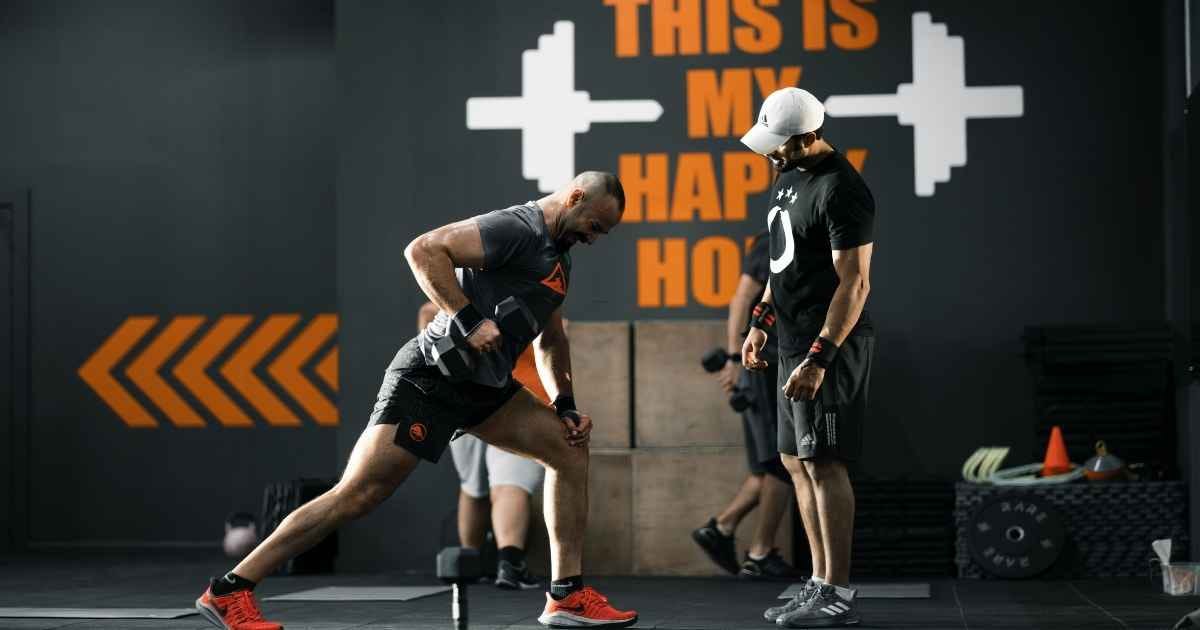
What’s the Difference Between Full Body and Split Workouts?
A full-body workout is exactly what it sounds like:
A single session where you train your entire body. That means you’re hitting your chest, back, arms, core and legs all in one workout.
And because you’re training the whole body at once, your exercise selection is heavily influenced by this goal.
You’ll primarily rely on compound movements — exercises that work multiple muscle groups simultaneously.
Think squats, deadlifts, lunges, farmer’s walks, pull-ups, dips, chest presses, and rows.
In contrast, a training split involves training different body parts on different days.
The most common example is the classic “bro split” (chest day, back day, leg day, etc.), typically done 5–6 days a week.
Another popular option is the upper/lower split, where you train upper body one day and lower body the next.
There are countless ways to structure your training, but when it comes to beginners who want to build muscle and get stronger as quickly as possible, it’s hard to beat full-body workouts.
Now let’s talk about why they’re so effective.

#1 You Train Every Major Muscle Group Frequently
The first benefit of full-body workouts is training frequency. They get you in the gym three times a week, hitting all the major muscle groups.
Research consistently shows that training a muscle group 2–3 times per week produces superior gains.
When you compare that to a typical bodybuilding ‘bro split’ — chest on Monday, back on Tuesday, and so on — you’re nowhere near hitting each muscle group as frequently as you do with full-body workouts three times a week.
Another big advantage worth mentioning is that full-body routines achieve this higher frequency without destroying recovery.
And this leads perfectly into my next point…

#2 Full Body Workouts Maximize Recovery
The second thing you need to know is that muscle isn’t actually built in the gym—it’s built during recovery.
And when you train full-body three times a week, you’re maximizing recovery because you essentially have four days off.
And that’s where the magic happens.
You build muscle: when you’re outside the gym.
I always say, when it comes to working out, you want to do the least amount of work possible that still elicits the most change.
More isn’t always better and if you’re brand new to strength training, you want to make your life as simple and easy as possible.

#3 Full Body Workouts Create a Stronger Hormonal Response
And the reason why it triggers a stronger hormonal response compared to typical training splits is the amount of stress you’re putting on the body.
Look at it this way:
When you train full-body, you’re hitting all the major muscle groups in a single session.
Your body has to then respond to that big stressor by releasing more muscle-building hormones like testosterone and growth hormone.
And yes, bodybuilding-style bro splits also release testosterone and growth hormone, but nowhere near to the same extent as full-body workouts.
The overall stress just isn’t comparable.
And like I mentioned earlier in point 1, when you train full-body three times a week, you’re essentially creating three big hormonal spikes per week.
That means you’re putting your body in a far better position to build muscle and get stronger.
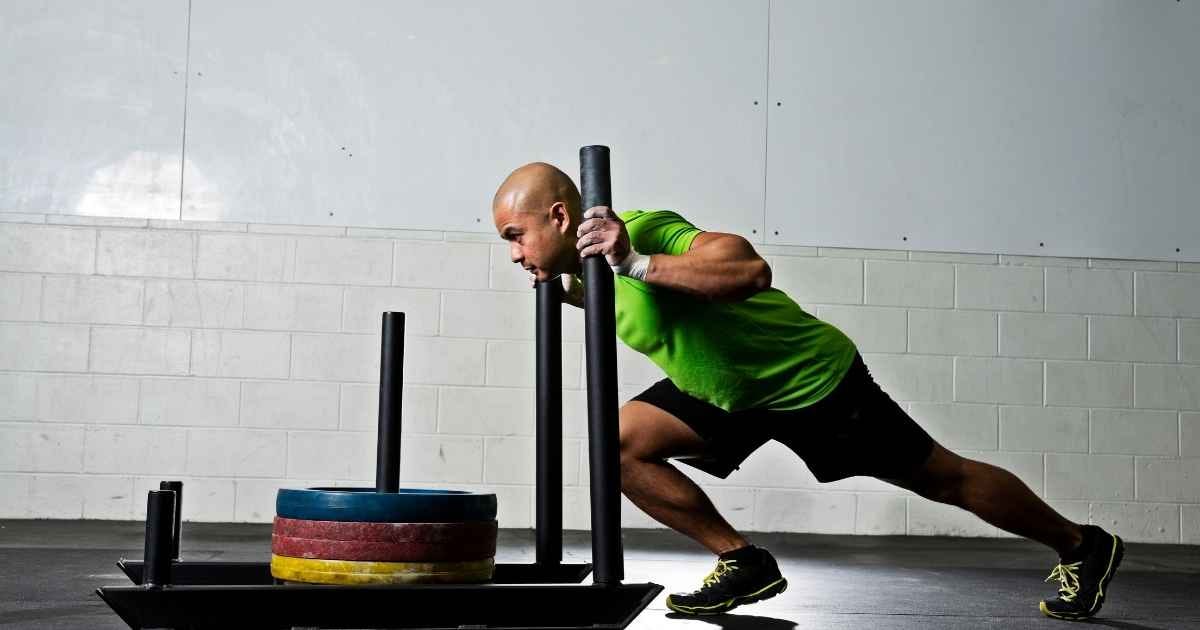
#4 Full Body Workouts Are Simpler From a Programming Perspective
If you’re brand new to the gym, it’s in your best interest to keep things as simple and easy as possible.
And this is exactly where full-body workouts shine, because they basically have you training just the seven fundamental movement patterns (which I discuss in this article).
That’s it – the programming is nice and simple.
For example:
On Monday you go in and train three of the movement patterns,
On Wednesday you train another three,
And on Friday you come in and just do loaded carries.
In those three days you’ve hit all seven movement patterns.
And unlike bodybuilding-style bro splits, you never have to stress about whether you’ve trained your arms enough, or if chest day is too close to back day.
You get everything done in three sessions.

#5 Full Body Workouts Make You a Better Lifter
When it comes to learning anything, frequency is king—and this applies not just to weightlifting but to basically every other skill too.
Cooking, skiing, dancing, whatever it is, the more often you do something, the better you’re going to get at it.
Well, full-body workouts have you performing the biggest “bang-for-your-buck” exercises on a regular basis.
That’s why what’s generally recommended for beginners is to stick with full-body routines for around two years.
That way you get good, at the basic lifts.

#6 Full Body Workouts Are Extremely Time Efficient
Because of the nature of full-body workouts—where you’re training everything—they place a lot of stress on your body.
In moderation, this stress is actually a good thing.
However, because they create this much systemic stress, you’ll find it’s in your best interest to keep your workouts nice and short—typically no longer than 60 minutes.
So from a time-efficiency perspective, this is a win for two big reasons:
You’re not spending hours in the gym every day.
You only need to train three days a week, making it incredibly time-efficient.

Sometimes life just gets in the way

#7 Full Body Workouts Allow You to Miss Sessions
I want to make this abundantly clear:
I’m not suggesting for one second that you start skipping workouts.
However, sometimes life gets in the way, and not every week is going to be perfect, and this is exactly where full-body workouts shine.
For example, let’s say you train on Monday and Wednesday, but for whatever reason you can’t train on Friday—maybe something comes up at work and you have to stay late.
If you miss that Friday session, it really doesn’t matter that much.
Why?
Because you’ve already trained your entire body twice that week, so no muscle group gets neglected.
Now let’s compare that to a typical bro split, where each day is dedicated to a different body part.
Miss Friday in that program, and suddenly an entire muscle group gets skipped for the week, throwing everything off.
Full-body workouts give you flexibility and forgiveness.
When life happens, you’re still covered.
And if you’ve made it this far in the article, I highly recommend checking out the one I wrote on movement patterns because that’s where you’ll discover the exact exercises you need to be doing.