

Before I get into the main talking points of the article, I first want to address the pros of machines, because it’s not all doom and gloom.
For example, if you want to isolate a particular muscle, machines can be really good for that.
They can also be useful in certain rehab situations
When it comes to cardio, machines can be great as well.
Think the SkiErg, the rower, and the assault bike (fantastic tools.)
And notice that I deliberately titled the article “for the most part” because I want to make the point that machines are not useless.
There is a time and a place for them.
However, for most people who don’t have much time on their hands and for people who just want to get fitter, look better naked, and get stronger — then quite frankly, machines aren’t the best use of your time.
So now, let’s talk about the cons of gym machines.
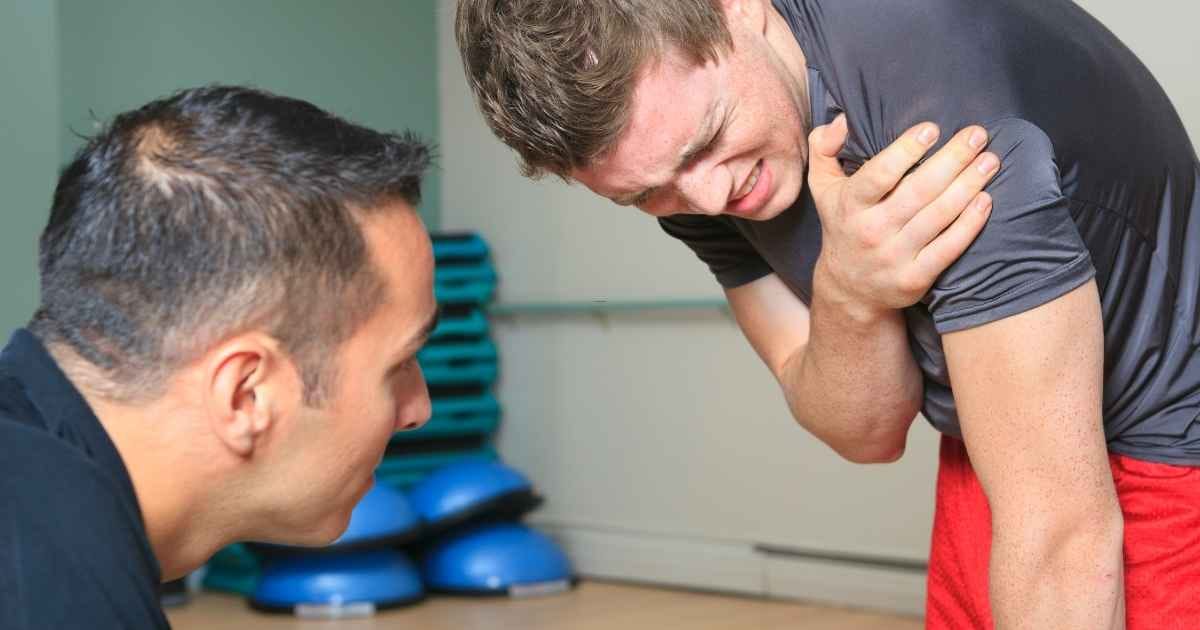
#1 Gym Machines Can Make You More Injury Prone
The irony is that many personal trainers will recommend beginners and newbies to start off with machines. They’ll argue that it’s safer, but I’d actually argue the opposite.
Here’s the thing:
One of the biggest problems with gym machines is that they’re not very good at training the stabilizer muscles — something I’ll be talking about later in the article.
A very good way to look at the human body, is that it’s a complex system designed to move.
Let’s take a basic human movement pattern like walking. When you walk, your legs are moving, your core is switched on, and your arms are swinging.
There’s a lot going on at once.
You could say that free weight compound movements — and bodyweight exercises, mimic the way the body is naturally designed to function:
And that is multiple muscle groups working together at the same time.
The problem with machines is that they largely ignore this. With machines, you’re isolating a single muscle and moving it in a fixed plane of motion.
And If we go back to the beginner example I mentioned earlier, in most cases a newbie would be much better off, learning how to do a proper goblet squat rather than messing around on a leg press machine.

#2 Free Weights/Calisthenics Are Better From a Time Perspective
The thing is, time is one of your most valuable assets. Once it’s gone, you don’t get it back.
Not to mention, many people have significant responsibilities outside the gym — whether that’s work commitments, school, university, or raising children.
Any parent will tell you that raising kids is a 24/7 job.
And if you look at machine training, it often isn’t the best use of your time.
For example, if you wanted to do a full-body workout using only machines, you’d have to spend a significant amount of time (potentially hours) in the gym.
In contrast, free-weight compound movements allow you to get a really effective workout in around 45 minutes sometimes even less.
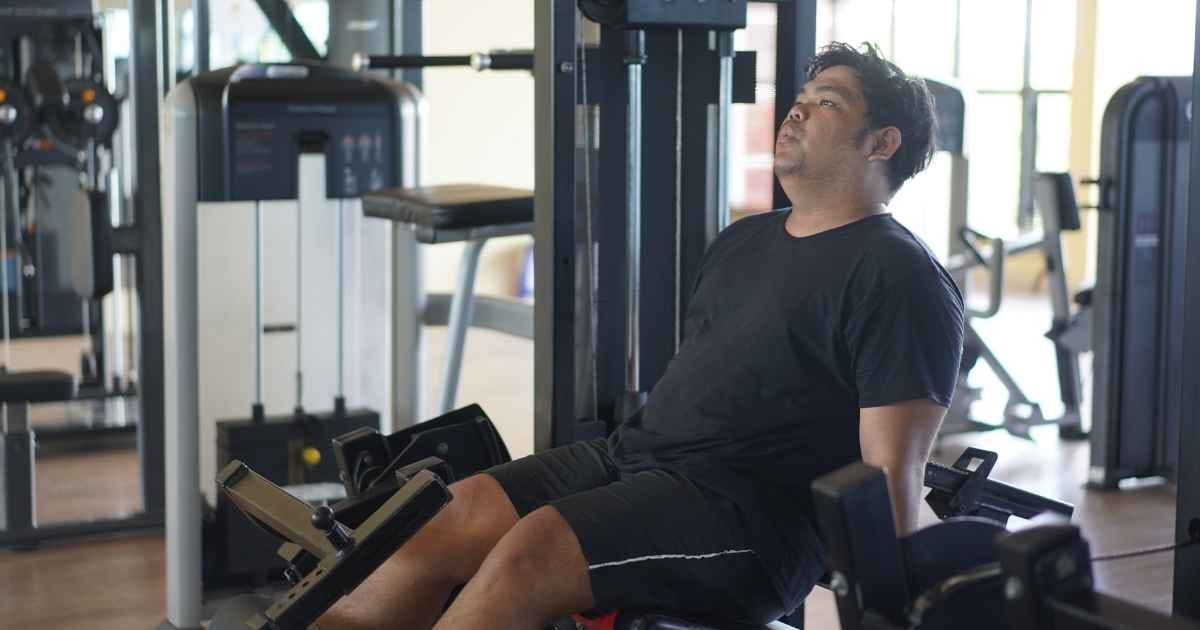
#3 Gym Machines on Average Burn Less Calories
To look better naked, it’s in your best interest to build muscle and lose body fat and when comparing machine exercises to the big compound lifts, the compound movements are far superior.
Compound lifts work multiple muscle groups simultaneously, which increases the metabolic cost of the exercise.
This means you burn more calories not only while training, but also at rest
And this is really, what most people are looking for.
#4 When Using Gym Machines the Core Isn’t Activated to the Same Degree
Anybody who has done pull-ups will tell you that it ain’t just a back, bicep, and trap exercise.
It’s also a very underrated core exercise.
One of the biggest problems with machines is that you just don’t get the same core activation.
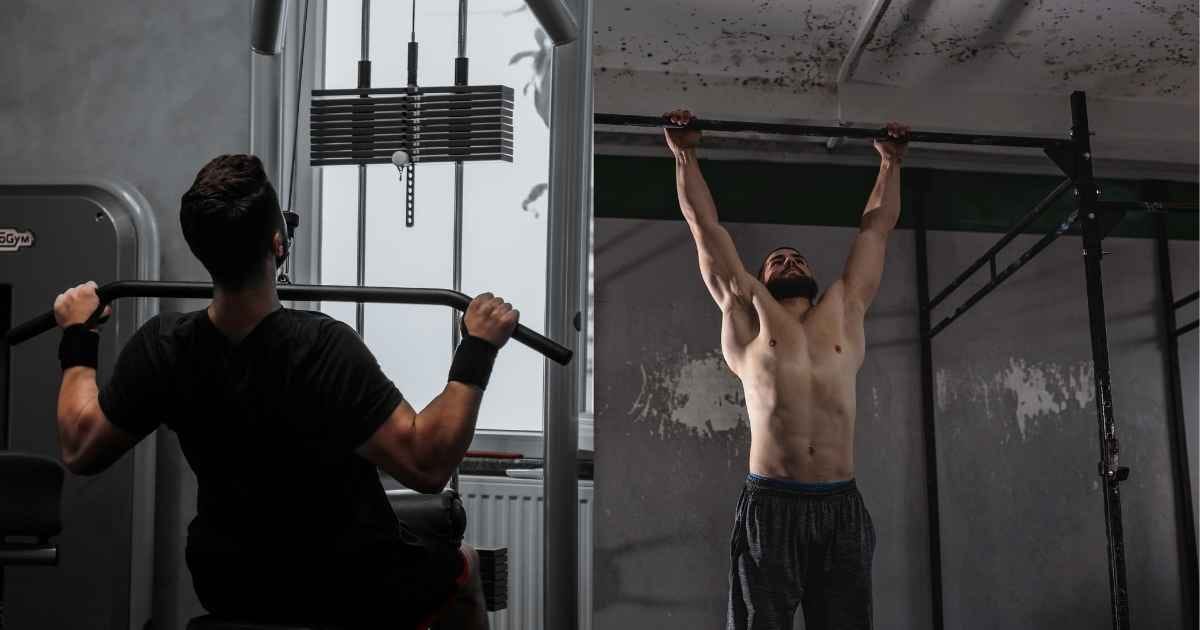
Let’s compare a pull-up to a lat pulldown and to be fair, the lat pulldown machine is actually one of the better machines, so I’m not hating on it.
That said, the pull-up is superior.
With a pull-up, you’re hanging from a bar and moving your entire body through space. Your core has to engage — there are no ifs, ands, or buts about it.
Compare that to a lat pulldown:
You’re seated in a fixed position, simply pulling the weight down.
The core activation just isn’t the same.
Some personal trainers argue that it’s better for beginners to start with lat pulldowns.
I’d actually disagree.
If someone is learning pull-ups, they can use resistance bands, do negatives (which are a fantastic way to build pull-up strength), or perform inverted rows — another excellent upper-body exercise.
I want to make it perfectly clear:
I’m not hating on the lat pulldown machine. It’s one of the better ones.
But from a pure general fitness standpoint, lat pulldowns should supplement your pull-ups and chin-ups — not the other way around.

#5 Less Functional Strength Transfer to the Real World
A very good way to look at it is this:
When you lift things outside of the gym, they are not guided or fixed like they are on gym machines.
For example, when you lift and move furniture, carry luggage, or bring in groceries, your body has to naturally stabilize the load in order to protect yourself.
The problem with machines is that they greatly reduce this stabilization demand because the machine is guiding the movement for you.
And this leads me perfectly to my next point...
#6 Gym Machines Reduce Stabilizer Muscle Engagement
This basically means your body doesn’t have to work as hard and to be fair, in a rehab setting, this can actually be a good thing.
But if you’re dealing with someone who’s injury-free and just wants to get fitter, faster, and stronger, then the lack of stabilizer muscle engagement isn’t a pro — it’s actually a con.
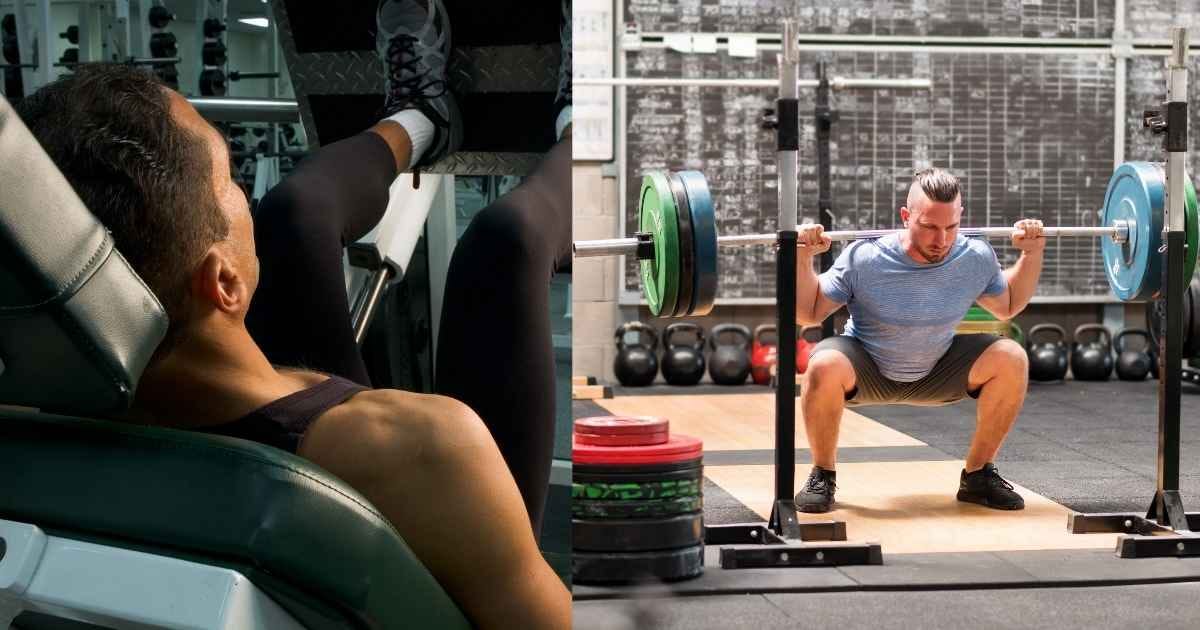
Let’s compare the leg press to the barbell back squat, specifically from a muscle stabilization perspective.
The problem with the leg press is that the stabilizers don’t really have to kick in because you’re essentially lying there with your back supported against the pad.
In contrast, during a barbell back squat, you have to actively stabilize the load.
You need to keep your core tight and braced, while your hips and glutes work together to stop you from tipping over.
The stabilizers in your ankles, knees, and upper back are all engaged.
The squat is truly a full-body movement.
And if all you ever did were heavy barbell back squats, that strength would very likely transfer over to the leg press machine.
On the other hand, if all you did were heavy leg presses, it doesn’t automatically mean you’d be able to squat big weights.
When comparing the two exercises from a general fitness perspective, the barbell back squat is superior.
#7 Free Weight Exercises Boost Your Testosterone Levels More Than Gym Machine Exercises
This is actually one of the most important benefits and if I had to sum up muscle building in one word, it would be hormones.
It’s all about your hormones
And how you influence them comes down to exercise selection, diet, sleep, and stress management.
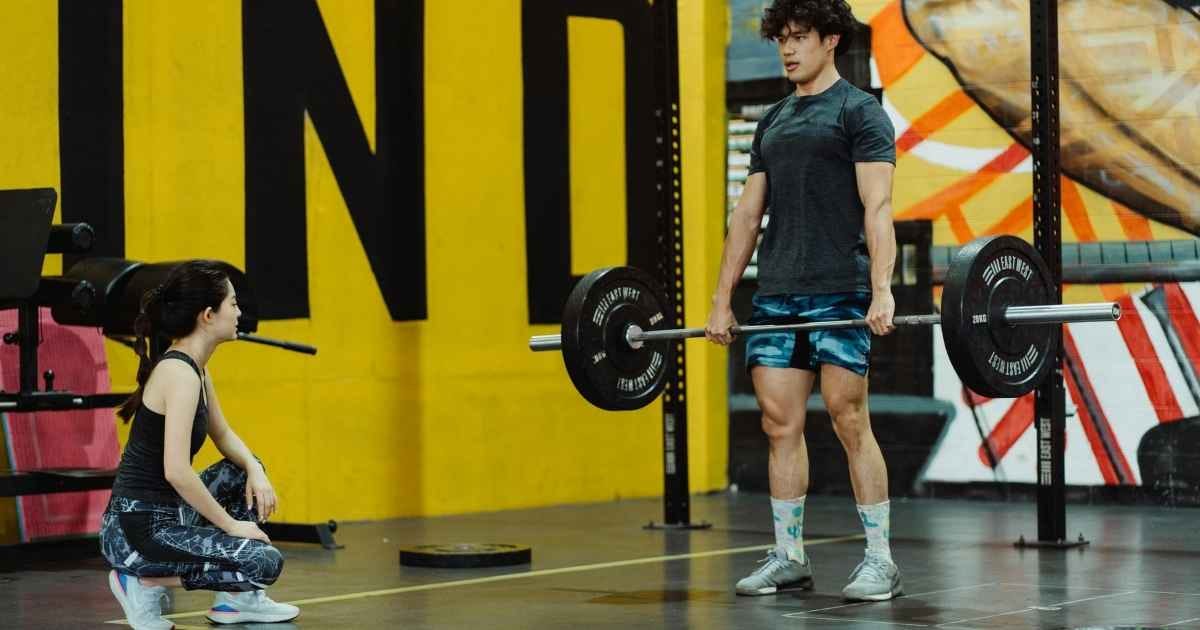
And from a pure hormonal perspective, free-weight compound movements and bodyweight exercises (such as dips, pull-ups, and box jumps) are far superior to machine-based exercises.