

In today’s day and age, it’s easier than ever before to buy something.
Why?
Because we’re all walking around with smartphones in our pockets, and we’re also being marketed to like never before.
Turn on social media, and you’re seeing advertisements. Switch on your television, and you’re seeing advertisements.
Turn on your radio, and you’re hearing advertisements. Walk around your local city centre, and again you’re seeing billboards advertising to you.
Basically, we’ve got all these messages coming at us, telling us that we need to buy.
So it’s quite understandable why some people come to the conclusion that in order to be happy they need to buy things.
But the truth is, you don’t and psychology actually backs this up, so let’s talk about it in more detail.
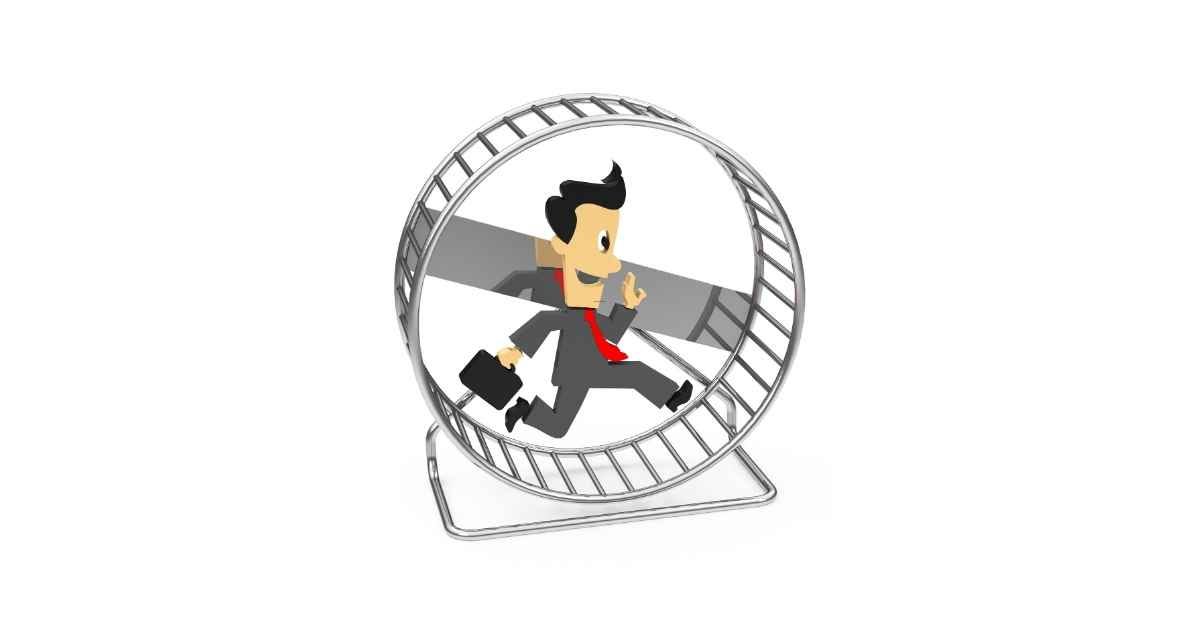
#1 Hedonic Adaptation (The Hedonic Treadmill)
So, for those who don’t know, hedonic adaptation is basically the idea that we all have a baseline level of happiness and what tends to happen after positive or negative events is that we return to that baseline level.
For example, if you get a new job, you’ll initially feel great—you’ll be on a high, buzzing with excitement.
But soon afterward (days or weeks later), the novelty wears off.
It’s the same when you buy things: you feel good at first, riding that initial high, but then, as days or weeks pass, the excitement fades, and you return to your baseline.
Some people fall into the trap of constantly buying to chase that high—like a man running on a treadmill, exerting effort but going nowhere.
And this leads perfectly to my next point:
The joy you experience from buying is temporary.

#2 Temporary Joy Only
You know yourself—when you buy new things, the feeling is never permanent, so it will never bring you lasting fulfillment.
One of the reasons why so-called 'shopaholics' tend to buy all the time is because, a lot of the time, they're doing it to fill an emotional void.
Maybe they're bored, maybe they're lonely, maybe they're stressed—there's something going on in their lives.
If you actually look at it from a very logical point of view, who the hell needs 15 pairs of shoes?
You have two feet; you can only wear one pair at a time.
The point I’m making is this:
From a happiness perspective and even a financial perspective, it’s much better to buy what you actually need, rather than buying for buying sake.
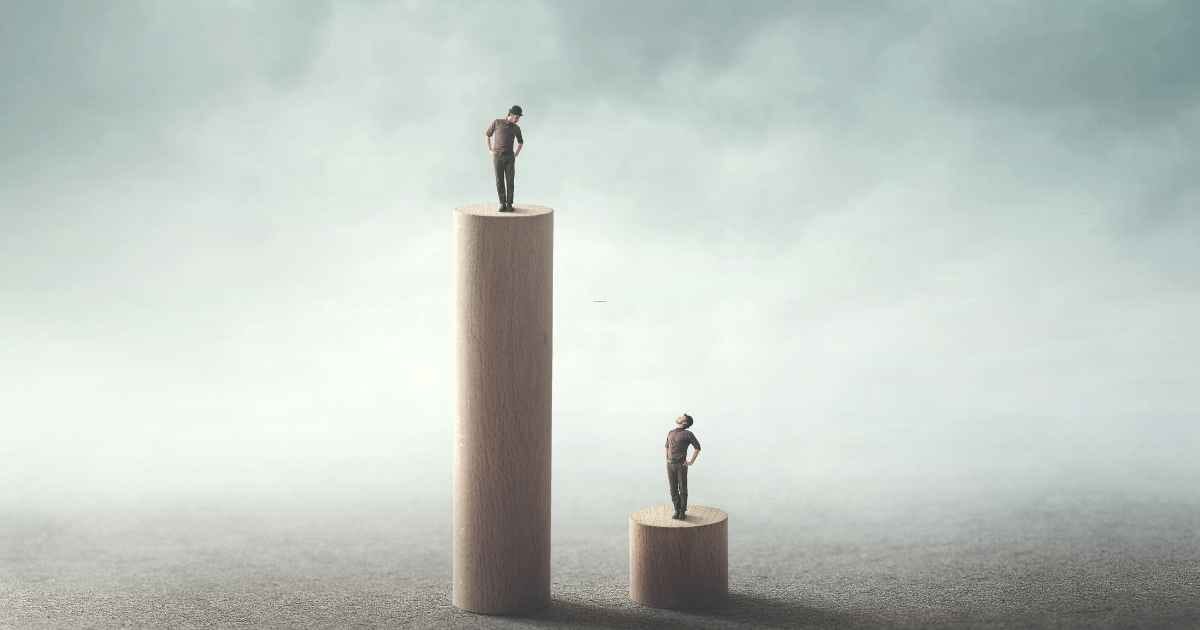
#3 Endless Comparison
Obviously, this depends on how your “wired up,” but there’s an expression called “keeping up with the Joneses.”
Basically, it’s all about playing a comparison game:
In other words If you buy something, I need to buy something bigger, better, and faster.
For example, imagine two people living on the same street. One neighbor gets a new kitchen, and the other—who’s caught up in the comparison game—now feels compelled to get an even bigger one.
Not because they need it, but simply to outdo their neighbor.
The same goes for cars. If one neighbor buys a new car, the other has to go out and get a bigger, faster one—again, not out of necessity, but just to one-up them.
When you really think about it, this kind of behavior is pathetic. It truly is.
But this behavior is more common than you think, especially in middle class environments.
The problem is, that living this way will never make you truly happy, for two reasons:
Things don’t bring lasting happiness.
It will probably leave the person playing the comparison game drowning in a boatload of debt and what for “keeping up with the Joneses.”

#4 Many Possessions Require Ongoing Costs
A car is a perfect example of this—so is buying a house. You’re not just buying it once; they come with ongoing costs.
Let’s use a car as an example:
You have to fuel it, insure it, and maintain it. And let’s just say, for example, you’re somebody who’s living paycheck to paycheck—which, by the way, is a lot of people—if that car breaks down, it’s probably going to cause you a lot of stress.
It’s just something to think about.
And in this article here, I talked about the benefits of owning an old, reliable car—especially the psychological benefits.
Because at the end of the day, nobody needs—keyword here is needs—a top-end sports car.
The purpose of a car is to get you from A to B.

#5 Experiences Trump Things
And the beauty of this is that it doesn’t even need to be mega expensive.
This could be going go-karting with the kids, going out for a meal with family or friends, or going on a weekend away with the girlfriend or wife.
If you want to buy happiness, you’re better off buying experiences rather than things.
The reason for this is simple:
You create new memories.
It’s shared experiences that ultimately bring people closer together.
From a happiness perspective, if I had a choice between spending a couple of grand on a watch or a couple of grand on a camping trip with family and friends, nine times out of ten I’m choosing the camping trip.

#6 Materialism Linked to Lower Well-Being
So if you’ve made it this far in the article, you’ve probably come to the conclusion that buying things won’t make you happy.
And this ain’t just me saying this—studies back this up.
What the studies show is that highly materialistic people:
No. 1, tend to experience higher rates of depression, and
No. 2, they tend to be less grateful for the things they already have.
So let’s put things into perspective:
If you’re somebody who has a roof over your head, access to running water, and a fridge full of food, then you’re more blessed than you think.

#7 It Distracts from True Sources of Fulfillment
Sometimes in life, it’s the simple things that bring you the most joy.
For example:
Seeing your kids smile for the first time (money can’t buy that), building something with your hands so you get that sense of achievement, or contributing to a cause that means something to you.
Those three things that I’ve just mentioned will, from a happiness perspective, do more for you than buying things that you don’t need.
And what I’ve found in my own personal life is that the best things in life are either free or cost you next to nothing.