

I’m not going to come on here and say that IQ doesn’t matter because there are certainly benefits to having a high IQ.
For example, those who have high IQs tend to learn concepts faster. These are the people who are going to school and scoring high on academic tests, and obviously this can open doors.
Another benefit of having a high IQ is problem-solving, and of course in certain professions this can be really, really valuable—so think mathematics, science, engineering, programming, things of that nature.
So, like I previously said, there are benefits to having a high IQ, but here’s the thing:
It’s not the be-all and end-all.
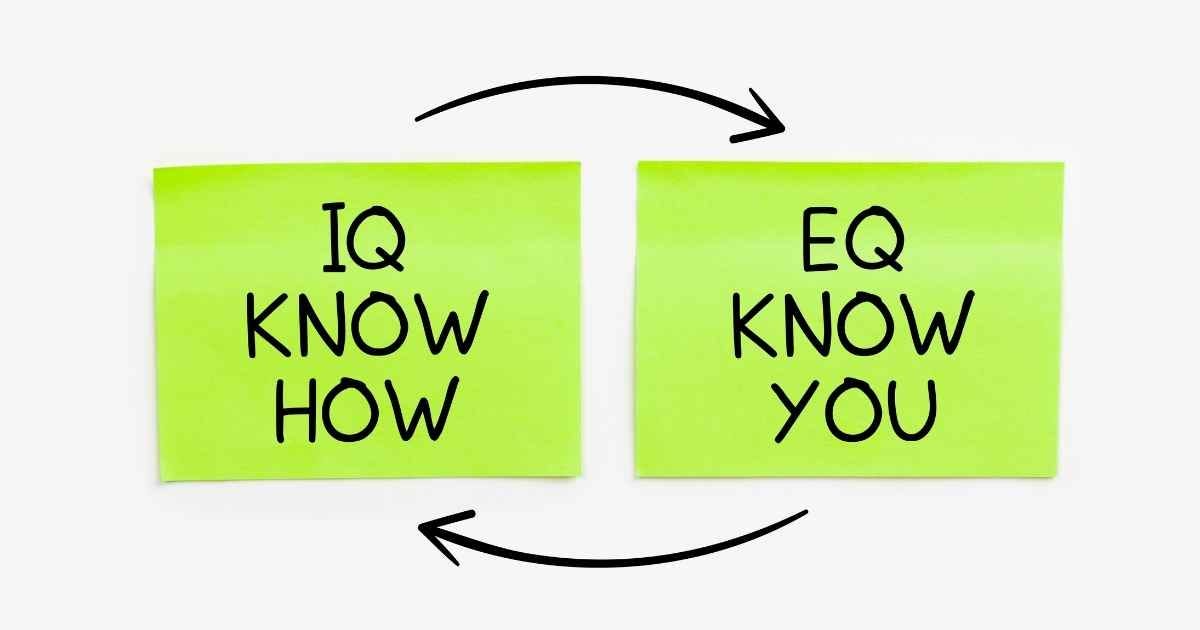
And I’d actually argue that emotional intelligence, or EQ as some people like to call it, is more important.
And this is what I’m going to be talking about in this article.

#1 EQ Helps You Actually Use Your IQ
So let’s just get straight to the point…
If you have a guy who has a high IQ as well as a high EQ — you’re basically looking at leadership material.
And the two examples I’m going to be talking about here, who possess both are soccer managers Carlo Ancelotti and Jürgen Klopp.
So for those that don’t know Carlo Ancelotti has won the league in Italy, Spain, France, Germany, and England.
He is the ONLY manager to do this.
The guy is a tactical genius — he can adapt to different systems, countries, and eras.
So no doubt about it, his IQ is very, very high. But what sets him apart is actually his emotional intelligence.
This guy is able to manage big egos, he’s able to connect with his players and adapt to different cultures.
I truly believe that Ancelotti wouldn’t have achieved the success that he has, if it wasn’t for his emotional intelligence.
Another example of a manager who possesses both is the German Jürgen Klopp. Jürgen Klopp has won the league in Germany and he’s also won the league in England.
When it comes to tactics he’s a genius — very, very smart.
But again, just like Ancelotti, it’s his emotional intelligence that sets him apart.
He’s able to build a very strong emotional connection with his players — and with the fans as well.
Jürgen Klopp is loved and adored by many, many people, and you could say that’s down to his emotional intelligence.
Not to mention the guy is extremely self-aware — he’s the first person to say when he’s made a mistake and own up to his mistakes.
And one that makes him more likable and two it makes him more relatable — that’s emotional intelligence.
#2 Smart Doesn’t Mean Self-Aware
A big, big part of emotional intelligence is self-awareness, and just because somebody has a high IQ that doesn’t automatically mean that person possesses true self-awareness.
In fact, true self-awareness is incredibly rare.
For those who don’t know, there’s a psychologist named Tasha Eurich who did some research to gauge people’s self-awareness, and what she found was that only 12 to 15% of the people she studied actually possessed true self-awareness—despite the fact that 95% thought they did.
It’s rare, and I’ll be the first to say you should take studies with a grain of salt.
But here’s the thing:
Even from my own personal experience of dealing with people, I know that not many people possess it.
It’s a quality held by few.
In this article I’m not going to talk too much about self-awareness because I’ve actually already done one on it..
If you’re interested, give it a read by clicking/tapping this link.

#3 People Often Remember How You Made Them Feel, Not Your Test Scores
In numerous articles that I’ve created, I’ve talked about the importance of open and honest communication.
It is absolutely essential. One of the reasons why relationships end is due to a breakdown in communication.
They stop communication openly and honestly with each other.
And once resentment kicks in and people stop trusting each other, it’s often downhill from there.
There’s a reason why I’ve titled this section of the article:
“People often remember how you made them feel, not your test scores”
Because amongst academics, having a high IQ is sort of bragging rights — a bit of a status symbol.
But the thing is, the average person couldn’t give a damn about somebody’s IQ score. They really couldn’t.
The way I like to put it is this:
When it comes to friendships, marriages, business partnerships things of that nature, it’s emotional intelligence that helps those things survive.
It’s not intellectual horsepower.
In the relationship world — it’s EQ, all day, every day.
#4 IQ Is Mostly Fixed… EQ Is Trainable
This is actually a very, very underrated benefit, because unlike IQ, EQ is trainable.
In the past, people have tried loads of different things to try and improve people’s IQ, but at this moment in time they’ve all been unable to really do that.
I say “at this moment in time” because it wouldn’t surprise me if, in the future, that changes.
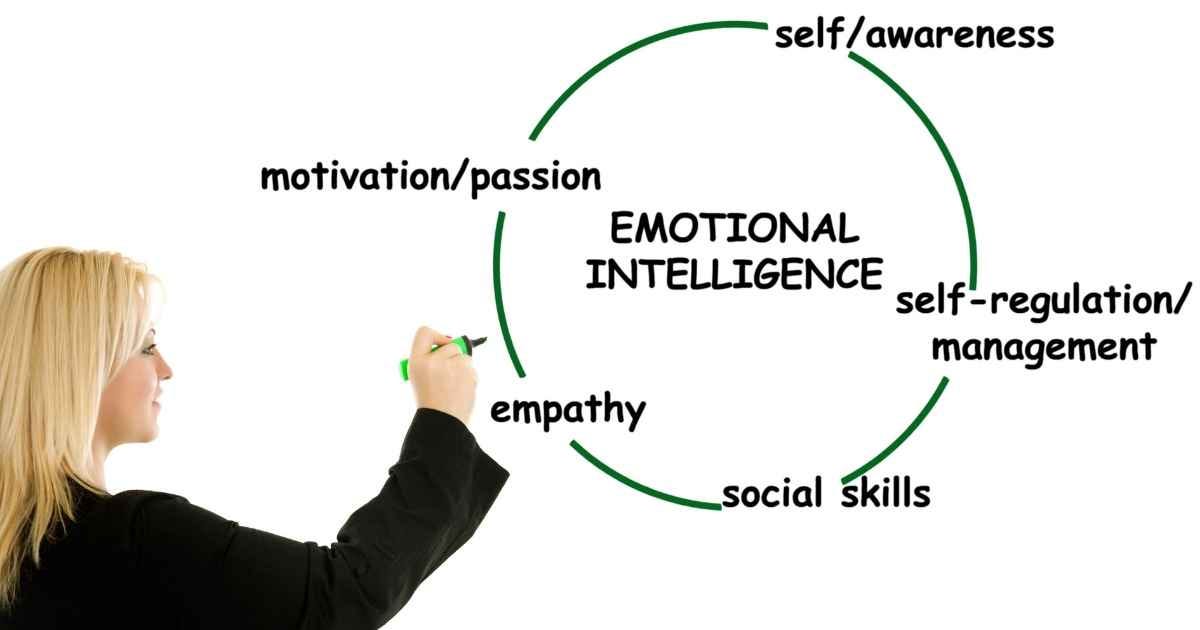
EQ is really just about managing yourself and managing relationships with other people
The image above sums up emotional intelligence perfectly:
It’s self-awareness
It’s self regulation (healthy coping mechanisms)
It’s working on your social skills (if this is something you struggle with)
It’s empathy (Seeing things from the other person’s perspective)
Understanding your motivations and passions (Knowing what makes you tick)
I would honestly go as far as to say that, from an ROI perspective, improving your emotional intelligence is one of the very best things you can do.